
About
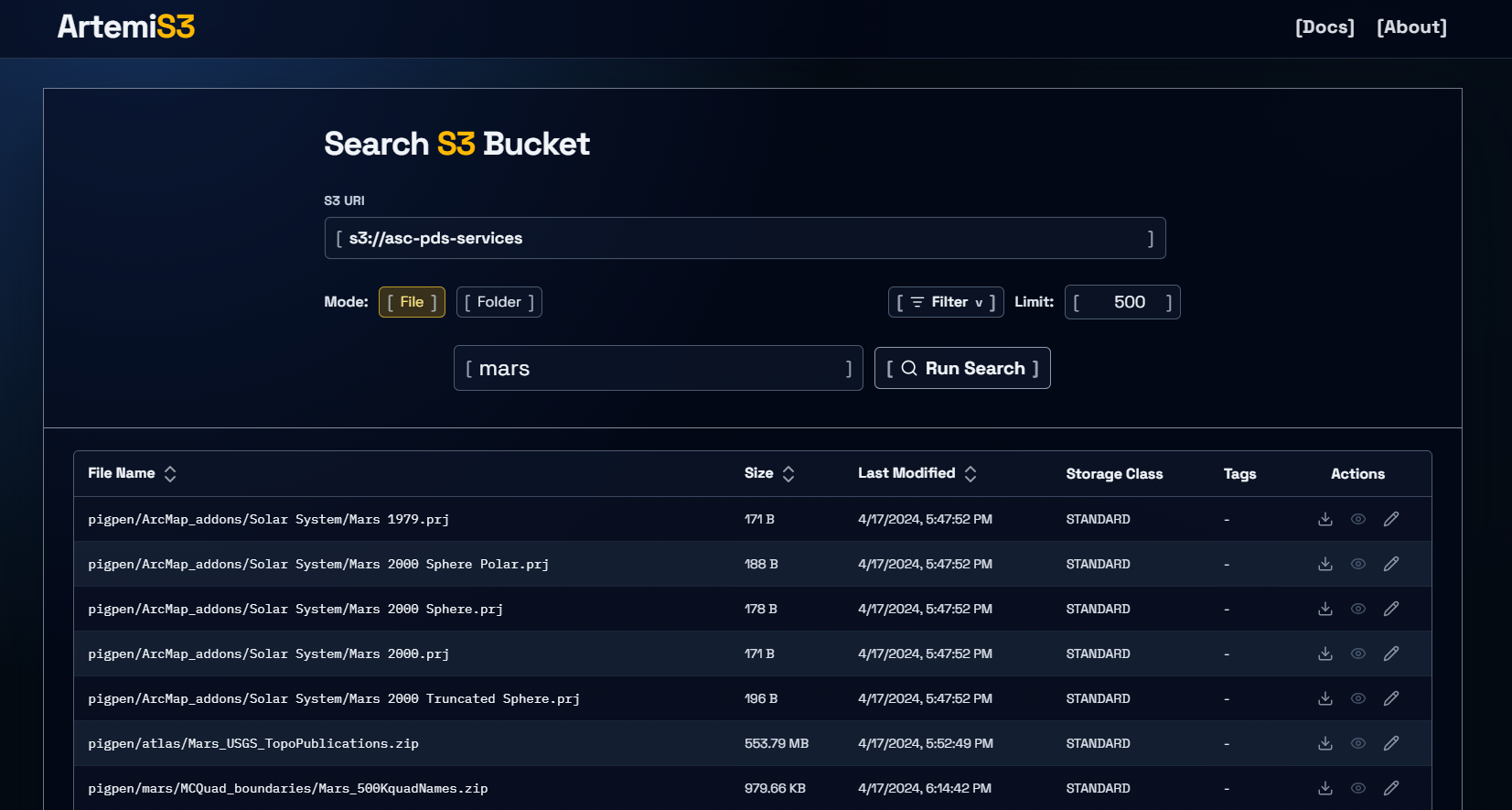
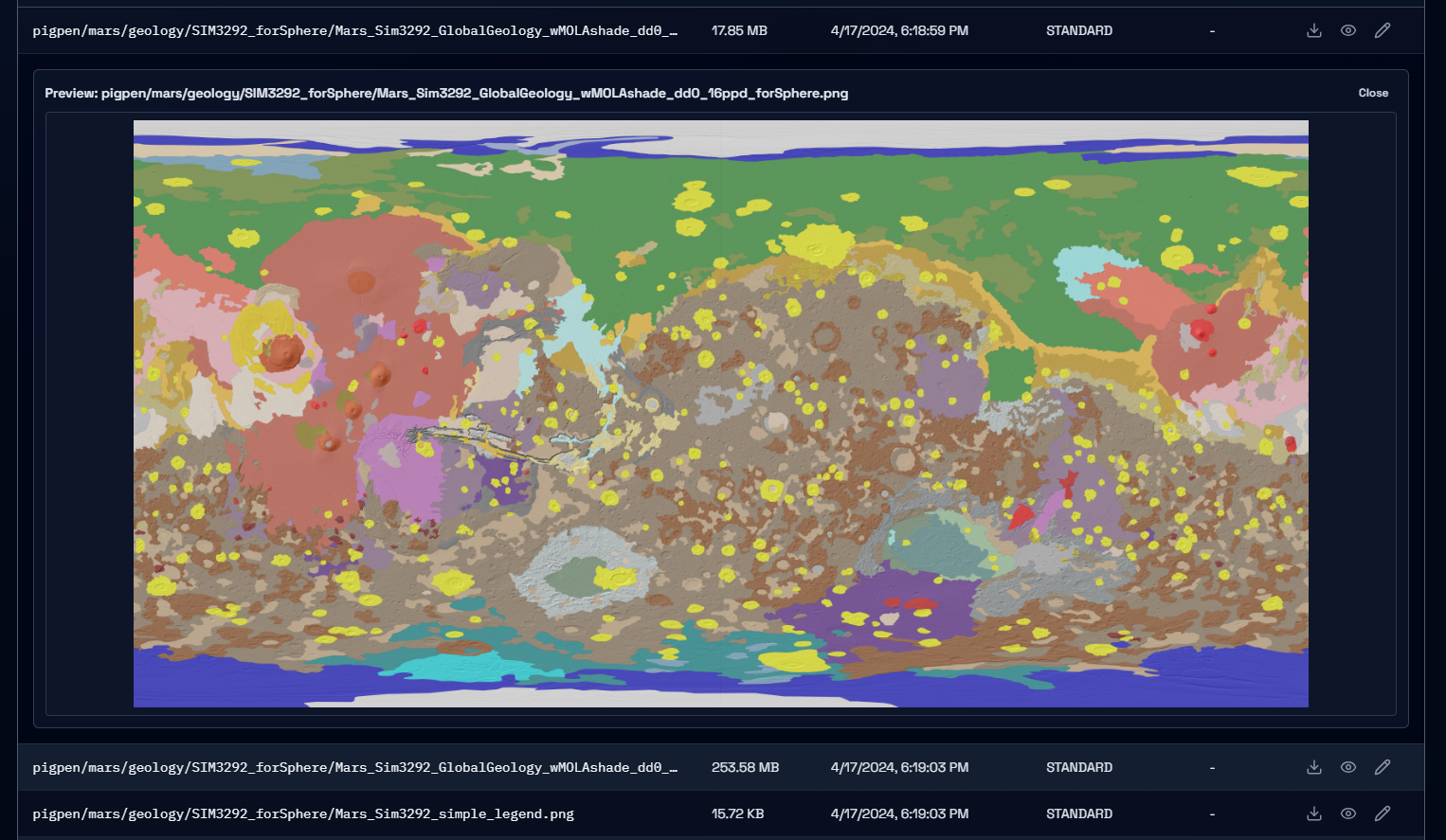
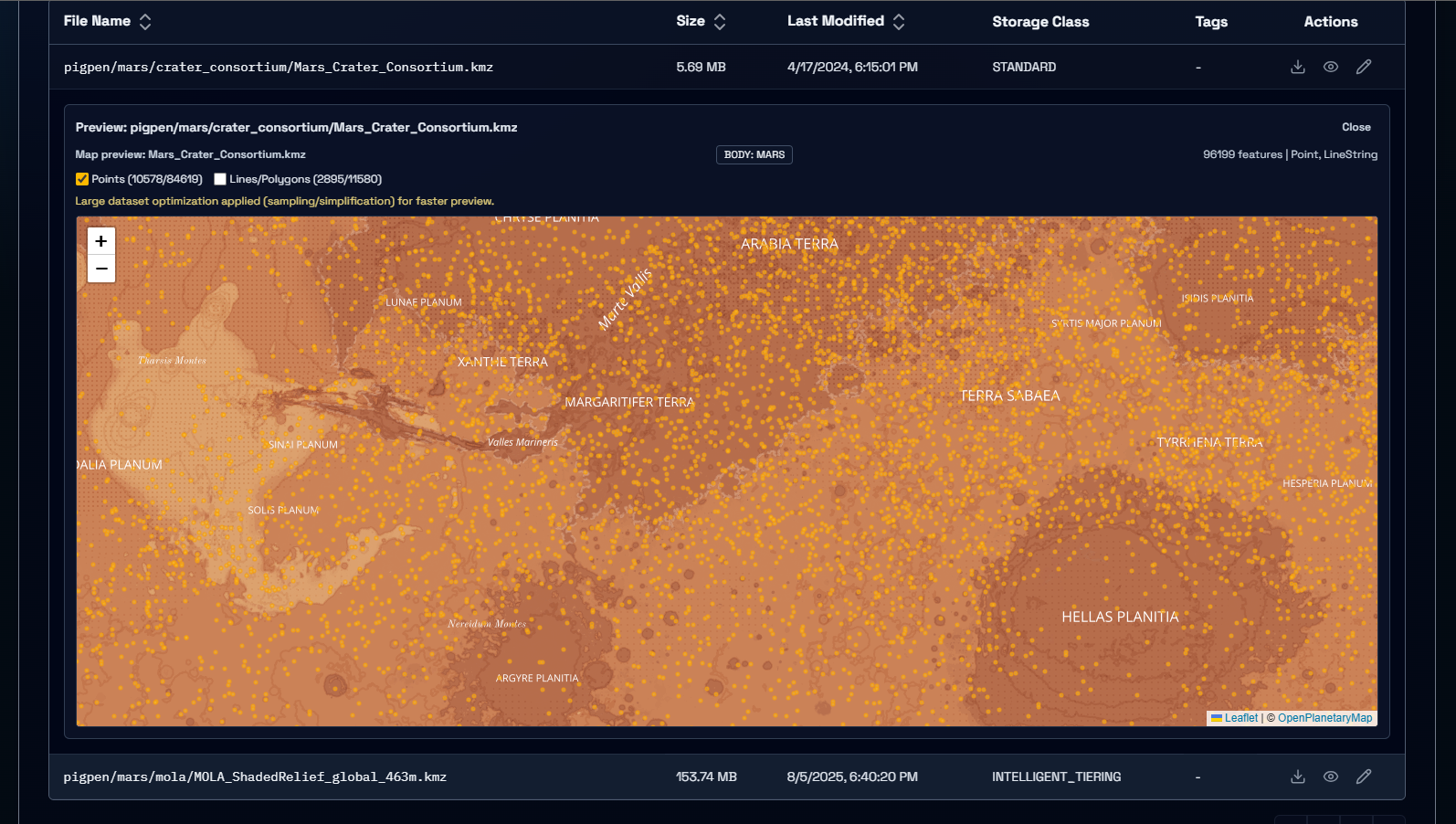
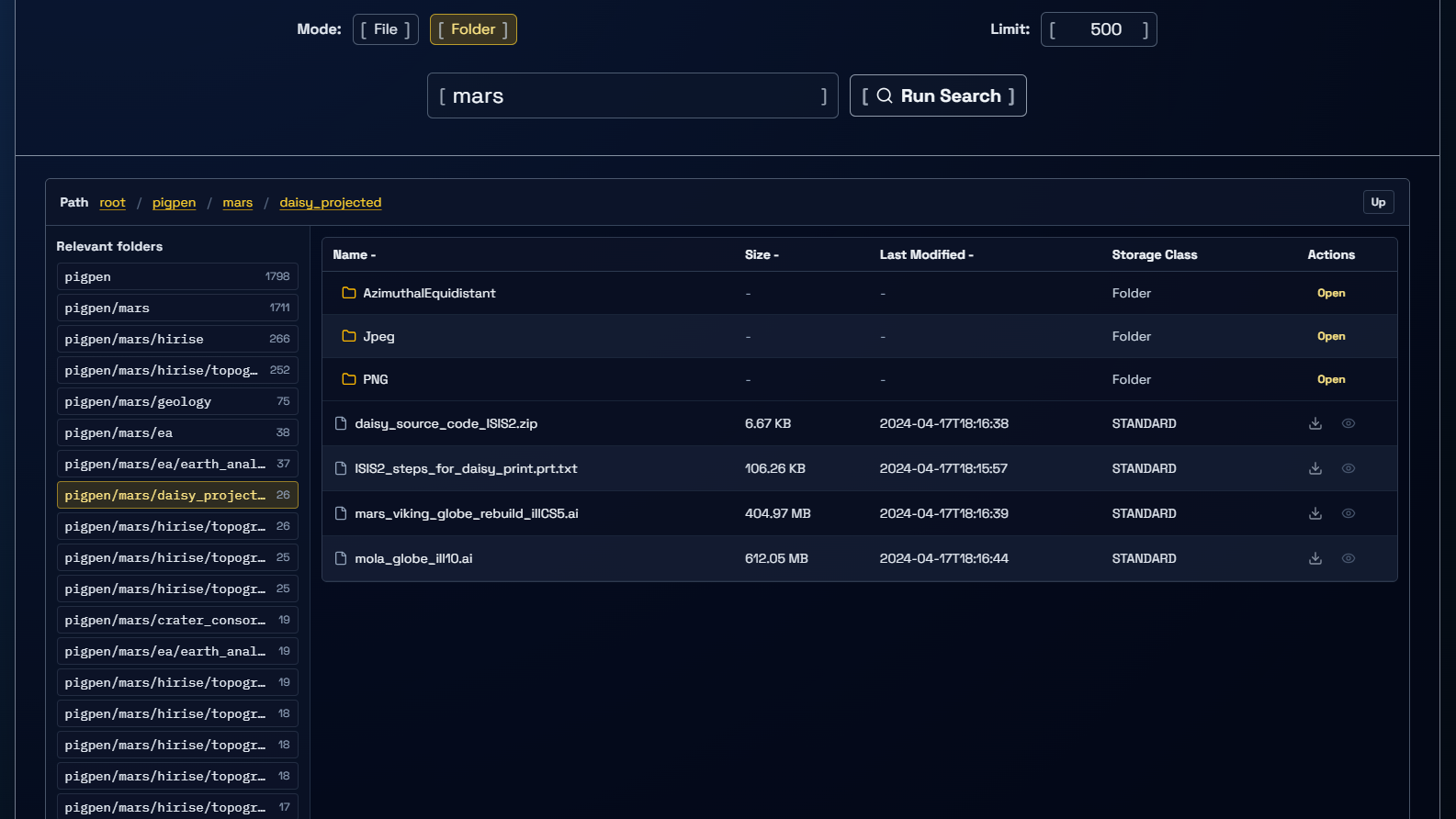
ArtemiS3 is an intelligent search and visualization platform built for the USGS Astrogeology Science Center to make large-scale planetary mission data easier to discover, navigate, and use. NASA and USGS store massive amounts of mission data in publicly accessible AWS S3 buckets, but researchers often have to browse through folder structures manually using simple a S3 browser interface with no search and filtering capabilities. ArtemiS3 was designed to solve that discovery problem by turning static cloud storage into an interactive research tool with full-text search, metadata indexing, filtering, previews, tagging, and a more intuitive file exploration experience.
The goal of ArtemiS3 was to help scientists move from slow manual navigation to fast, targeted discovery. Instead of clicking through deeply nested folders to locate relevant planetary datasets, users can search across indexed S3 objects, filter results by attributes like file type, size, and date, inspect metadata, and organize important files through tagging and collaboration features. In the capstone presentation, the project was framed around the idea that NASA's data is growing faster than scientists can navigate it, and ArtemiS3 addresses that by helping users index, search, visualize, and discover the data more efficiently.
From a technical perspective, ArtemiS3 was built as a modern, Dockerized web application. The frontend uses Svelte and Tailwind CSS to provide a responsive user interface, while the backend is built with Python's FastAPI to coordinate search requests, S3 access, and application logic. Boto3 is used to interact with NASA and USGS AWS S3 bucket storage, Meilisearch powers fast full-text and metadata search, and PostgreSQL stores lightweight user data such as recent searches and tagged files. The system was designed to run on an AWS EC2 instance with separate containers for the frontend, backend, database, and search engine.
My role on the project was Architect, which centered on helping shape the system design, technology stack, and overall implementation approach. The architecture connected a Svelte frontend, FastAPI backend, Meilisearch index, PostgreSQL database, and AWS S3 data source through a containerized deployment model. This gave the team a clear separation of responsibilities across the UI, API layer, search infrastructure, storage access, and user data persistence. The frontend routes requests through the NGINX reverse proxy to the backend, the backend communicating with Meilisearch and PostgreSQL, and Boto3 connecting the application to NASA and USGS S3 buckets.
The final product demonstrated a practical improvement over the existing workflow: before ArtemiS3, users were limited to manual folder navigation, no global filtering, difficult file discovery, and static storage interfaces; after ArtemiS3, users gained instant search, advanced filters, faster discovery, and a more interactive system. The project also included unit testing with Svelte's testing library and Pytest, integration testing with Postman, usability testing through USGS researcher surveys, and iterative improvements based on client feedback. Future work includes adding support for private S3 bucket access control, caching, rate control, and security auditing to make the system more scalable for enterprise and restricted research environments.